This essay examines how symbols of fertility, cycles, and femininity are embodied in representations of the harvest and the female figure. Longer days bring sunny weather this summer, and new opportunities full of life and happiness. The main idea is the golden harvest, with the figure as its strength. Being in a desert does not mean it is not fertile. After a long, dry winter, it appears as something new: life. Moving from chaos to order and back again, it keeps changing.
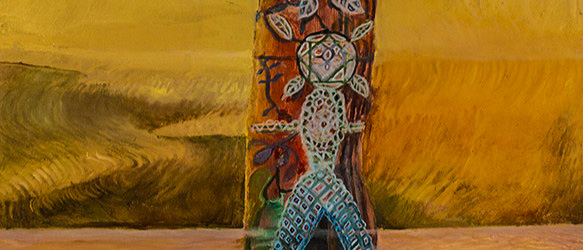
The bark holds the figure, and the symbols carved on it form an endless vision. These symbols include spirals representing the cycle of life and renewal, small grains signifying abundance and hope, and a sun design symbolizing light and growth. Each mark is chosen to connect with traditions where nature, cycles, and femininity are key themes. The female figure is the support of the house. Let’s remember Willendorf: the bigger the figure, the better the harvest, and the more fruitful. (Dixson & Dixson, 2011)
As the fall season is the most important, marked by community feasts, food gathering, and celebrations. Let us give thanks for a new harvest. (Indigenous peoples of the Pacific Northwest Coast, n.d.)
Equally, in the same way these carvings, the depiction of figures—especially those that appear intertwined with or emerging from the wood—can symbolize the inseparable relationship between humans and the natural world.
As a whole, the sign here is that the female seems trapped by, attached to, or holding the tree. Without realizing it, I was creating designs, and now she seems to be facing backward.
THE HARVEST
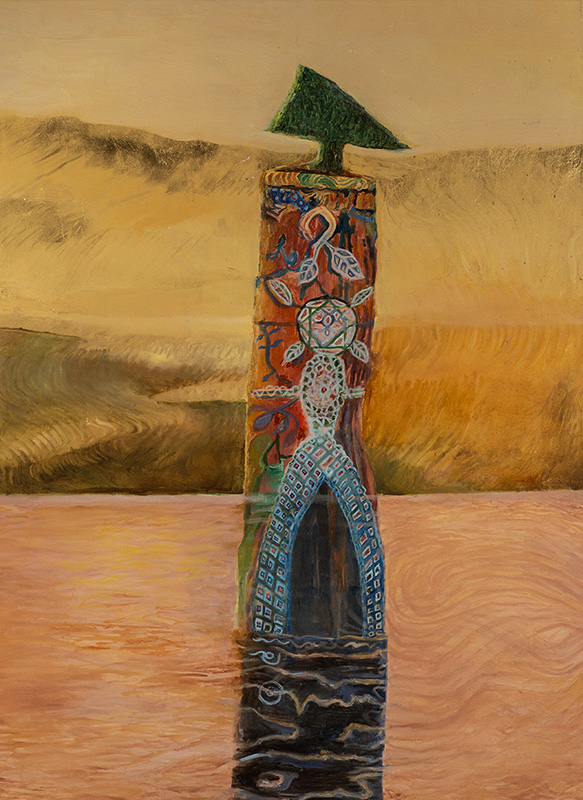 THE HARVEST SIZE 30″x40″ OIL, MIX MEDIA